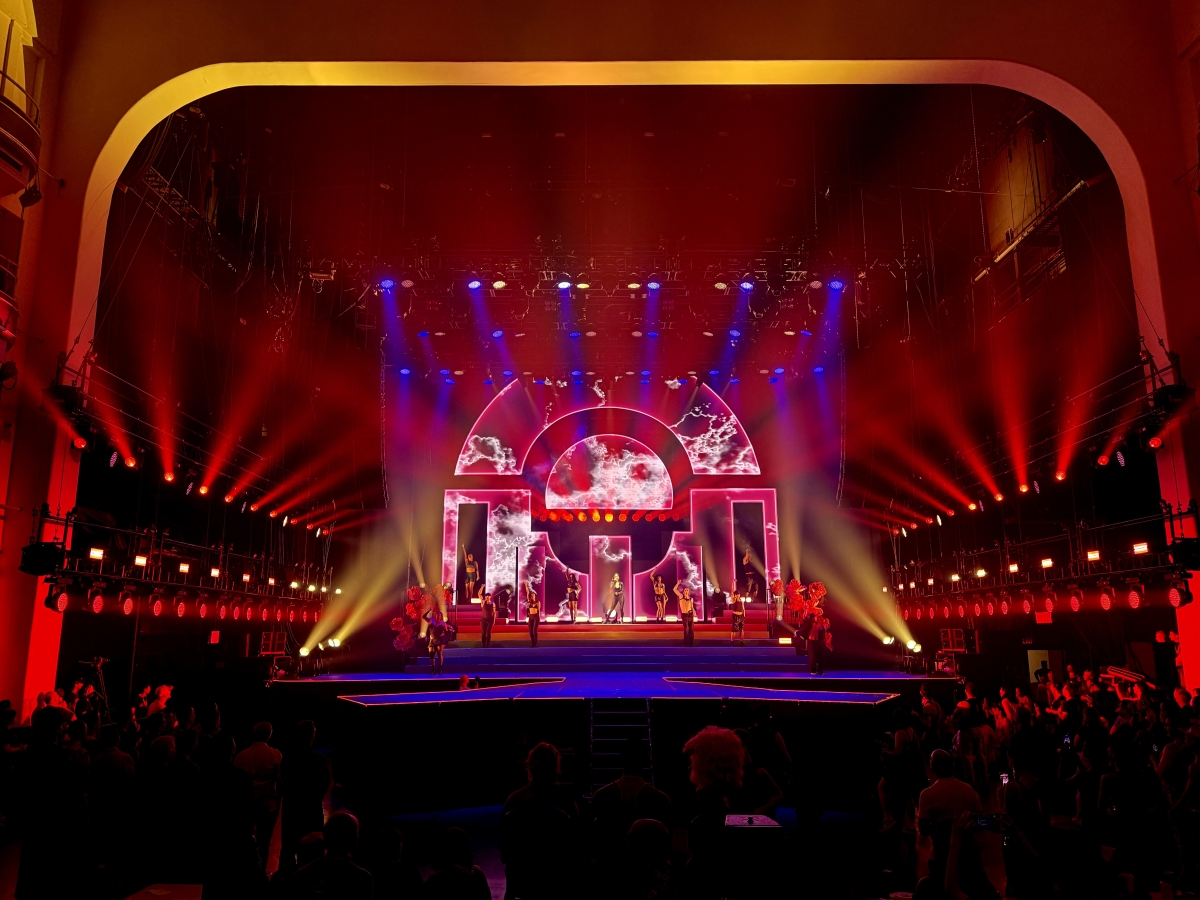
Photo: Broadway Bares 2025, Lighting Design by Joel Shier
TLDR;
How do lighting programmers transition from small shows to large-scale productions? Broadway moving light programmer Jonah Camiel outlines the key shifts: stop thinking in individual fixtures and start thinking in systems (front light, back light, texture, effects), build console files as if revisions are coming, and invest in tools like subgrouping and fan/align that become essential at scale. Career growth depends on trust built through smaller shows with designers. Speed comes from removing friction in your workflow, not rushing. The series "Between the Console and the Clock" covers topics specific to the moving light programmer role.
At some point, every programmer hits the same moment.
The rig gets bigger.
The room gets faster.
More people are waiting on you.
And suddenly, what worked on smaller shows doesn't feel like enough anymore.
This jump isn't just about more fixtures. It's about more pressure, more complexity, and less room for hesitation.
The tricky part is that no one really explains how to make that transition. You don't wake up one day ready for bigger shows. You grow into them.
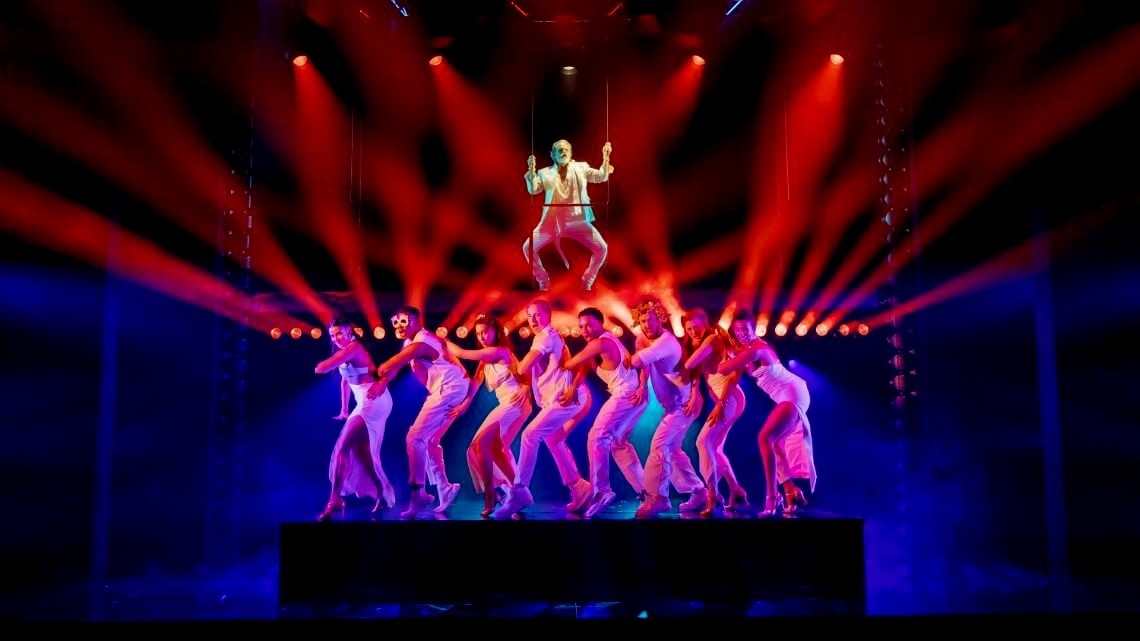
Photo: Mythic, Lighting Design by Kenneth Posner
Small shows are where the real learning happens
It's easy to think of small shows as a stepping stone - something to get through before "real" work starts. In reality, they're where most of your development happens.
Smaller rigs give you space to experiment. They give you time to make mistakes and understand why they happened. They force you to take ownership of everything.
This is where you build your habits.
How you structure presets.
How you organize groups.
These things matter much more on a big show - but you learn them on small ones.
Treat every small show like it's bigger than it is.
Build your file like revisions are coming.
Label things like someone else will need to understand them.
Don't rely on memory - rely on structure.
After every show, ask yourself:
- What slowed me down?
- What felt messy?
- What would break if this rig were twice as big?
That's how you start preparing for scale.
It's not about more lights - it's about more systems
One of the biggest shifts happens in how you think about the rig.
On smaller shows, it's easy to think in individual fixtures. On larger shows, that approach doesn't hold up. You have to start thinking in systems.
The first time I ever worked on a rig that was entirely moving lights, there were around 120 fixtures. Even though it was a shorter special event, it was still intimidating. The scale alone felt like a jump.
What made it manageable was how the designer approached it. They immediately began breaking the rig down into systems.
Front light. Back light. Side light. Texture systems. Effects systems.
That's how we worked the entire night.
Think about how you will focus each system. Do you need multiple versions of each? What fixtures can be repurposed between systems? How will you transition between them?
When you build systems instead of individual looks, you give yourself flexibility. When the designer asks for a change, you're adjusting logic - not rebuilding from scratch.
This is what allows you to move quickly in bigger rooms.
The tools you didn't use
As your rig grows, the way you use the console has to grow with it.
Things that felt optional on smaller shows start to matter. Grouping becomes more intentional. Channeling and Magic Sheets need to be clean and reliable.
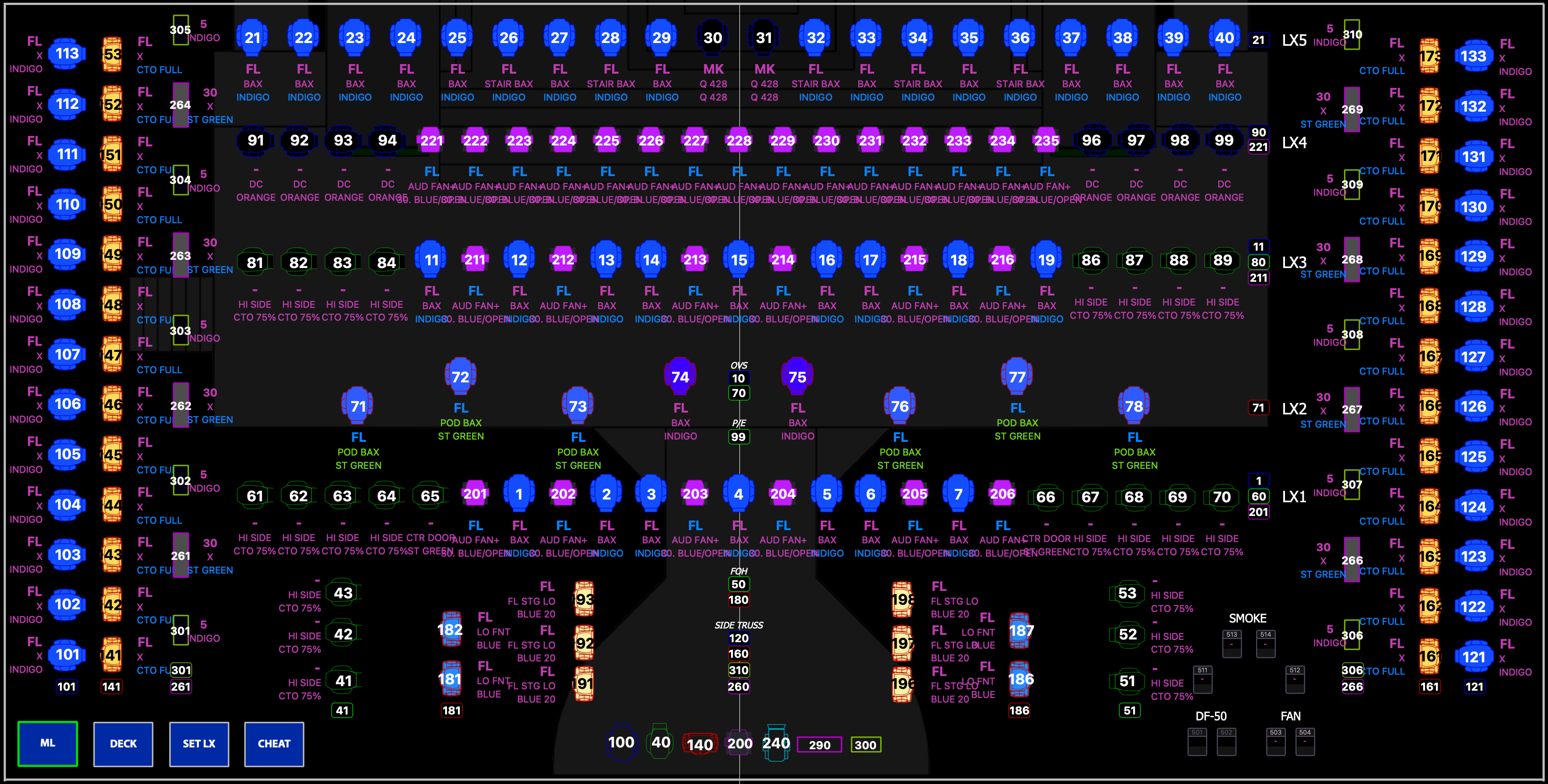
Photo: Broadway Bares 2025, Lighting Design by Joel Shier
The more fixture types you have, the more consistency matters. Color palettes need to match. Timings need to land together.
On a small rig, you might not notice that an LED fixture snaps out differently than an arc source fixture. On a larger rig, those differences become obvious.
You'll also start to rely on features you may not have needed before.
Subgrouping becomes essential, especially on effects-heavy shows.
Fan and align tools become critical when you need to focus large systems quickly.
These aren't advanced tricks. They're the tools that let you keep up as the scale increases.
Your career scales through people
Getting onto bigger shows isn't just about skill. It's about trust.
Designers bring programmers into larger rooms because they know how they work - because they trust them to keep up, and to not slow the room down.
That starts on smaller shows.
That designer who brought me onto that 120-fixture special event and I had just finished three small shows together. Those smaller projects were where we built the trust that made that opportunity possible.
Relationships have to be built from the ground up. I've done a smaller show first with just about every designer I've worked with.
Are you organized?
Are you calm when things change?
Do you listen before you act?
Are you easy to collaborate with?
Those are the things people remember.
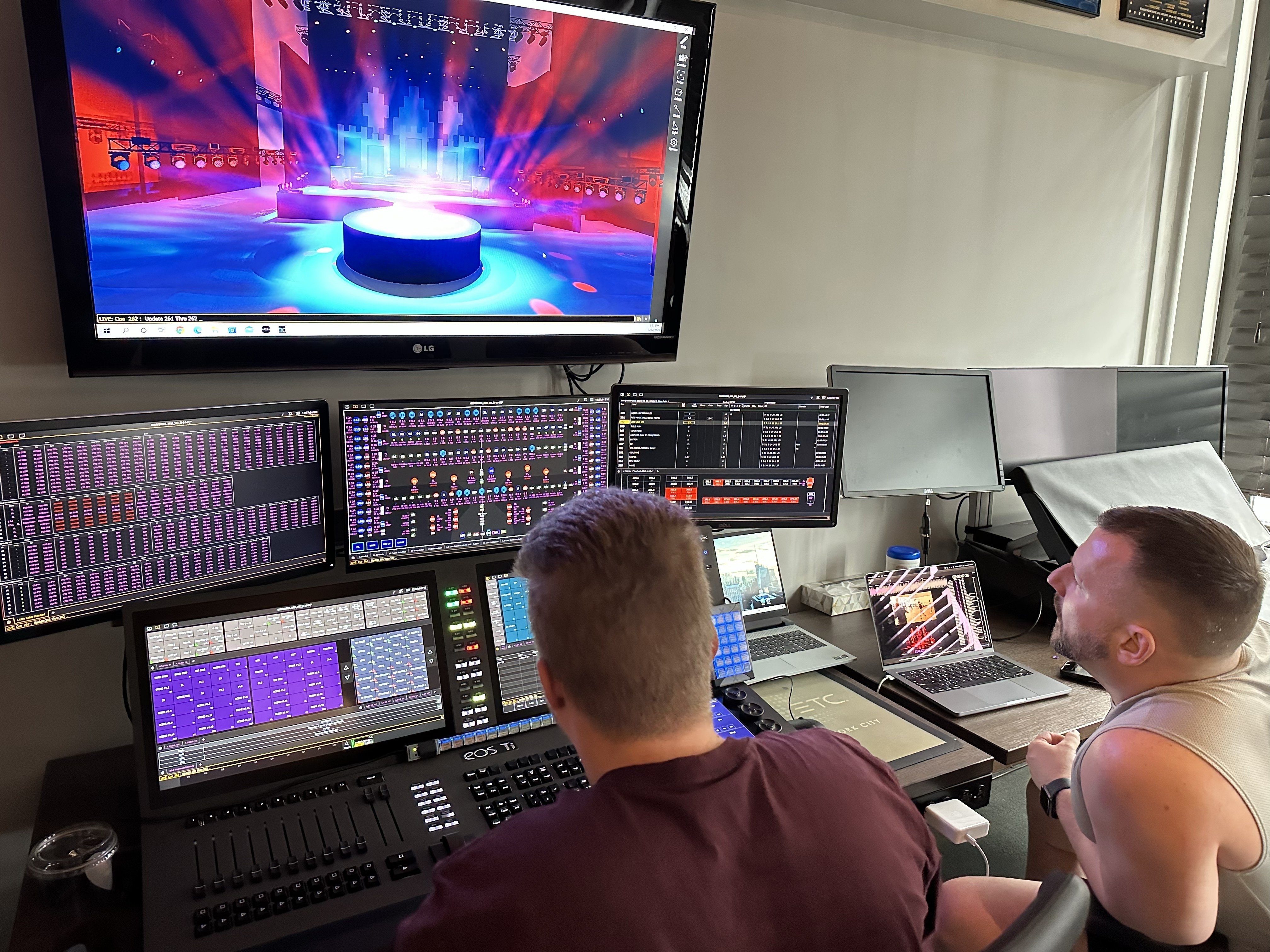
Photo: Broadway Bares 2025, Lighting Design by Joel Shier
The best way to meet designers is to do good work in the rooms you're already in - regional theater, small productions, projects where teams are still forming.
Those relationships grow over time.
Listening is what actually gets you hired again
Technical skill gets you in the room. Listening is what keeps you there.
Different designers have different ways of working. Some will speak to you directly - sometimes in near command-line syntax. You have to be comfortable with that. Others won't speak in technical language at all.
"Make it warmer."
"Give it more energy."
"Can we simplify this?"
Your job is to translate that into action.
Color changes.
Timing adjustments.
Movement choices.
The better you get at interpreting those notes, the faster the room moves.
In many cases, designers build trust over time. The more you work together, the more they trust you to interpret their ideas. A long-term relationship can be incredibly valuable - they may begin to rely on you more, and you help take some of the load off their plate.
At the same time, it's important to branch out. Every designer communicates differently. The more styles you experience, the stronger your instincts become.
Working on a variety of smaller shows is one of the best ways to build this skill.
Speed matters more as the scale increases
Bigger rooms move faster.
There's less time per cue.
More people waiting.
Less tolerance for disorganization.
You can't build speed overnight. You have to train it.
Time yourself when you practice. Find where you hesitate. Clean up your workflow.
If something slows you down, isolate it. Practice it. Or automate it if it makes sense.
Speed isn't about rushing. It's about removing friction from your own process.
Take the opportunities that stretch you
At some point, you have to take a step up.
A slightly bigger rig.
An effects-heavy show.
A designer you haven't worked with before.
You're going to feel behind sometimes. That's part of it.
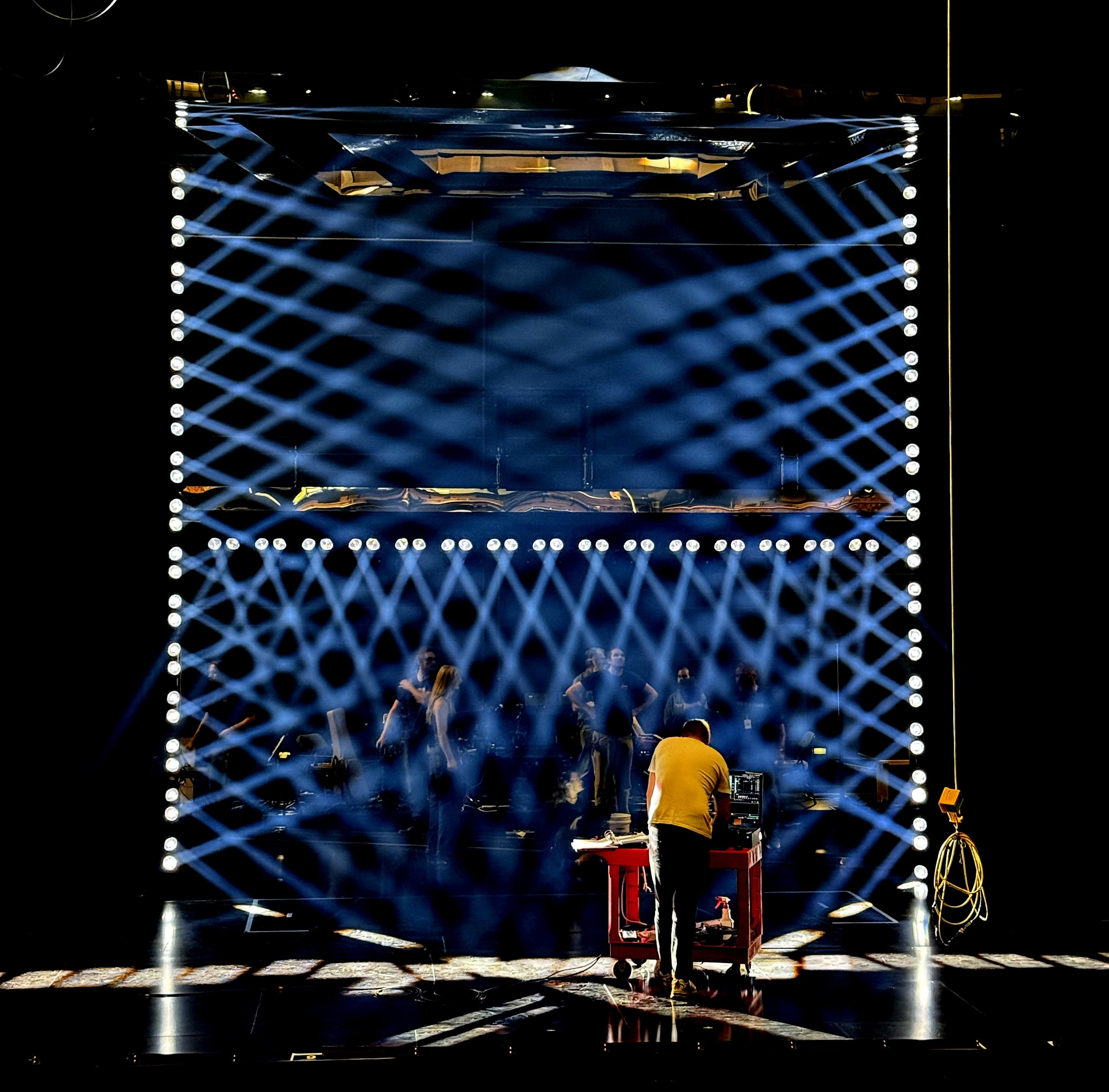
Photo: Mythic, Lighting Design by Kenneth Posner
The goal isn't to feel ready. The goal is to be prepared enough to keep up - and to recover when things don't go perfectly.
Triage can become the name of the game. In the moment, the priority is to keep the room moving forward. Then come in early the next day and fix your workflow when no one is waiting on you.
Mistakes will happen. What matters is how quickly you adjust.
Scaling is a process
You don't become a "big show programmer" overnight. It's a gradual shift.
Better habits.
Cleaner files.
Stronger relationships.
Faster decision-making.
Small shows aren't something you graduate from. They're where you build the foundation that everything else sits on.
The work scales because you do.
This is the second entry in the series, Between the Console and the Clock. We cover topics not typically discussed about working as a Moving Light Programmer to help demystify this important role. DM Jonah on Instagram @jonahcamiel with any topics you're interested in hearing more about! See the entire Between the Console and the Clock Series here.
Jonah Camiel is a Brooklyn based Moving Light Programmer originally from Boston, Massachusetts. He is a graduate of the production and design program for stage and screen at Pace University. Selected Broadway: Beaches, Every Brilliant Thing, The Wiz, Peter Pan Goes Wrong, Into the Woods, POTUS, Thoughts of a Colored Man. Selected National Tours: The Wiz, Mystic Pizza, Clue, Come From Away, Into the Woods, Ain't Too Proud. Other notable projects: Broadway Bares, Norwegian Cruise Lines, Virgin Voyages, CNN Studios, Food Network Studios, PGA Tour Studios, Love Island USA Reunion. www.jonahcamiel.com