
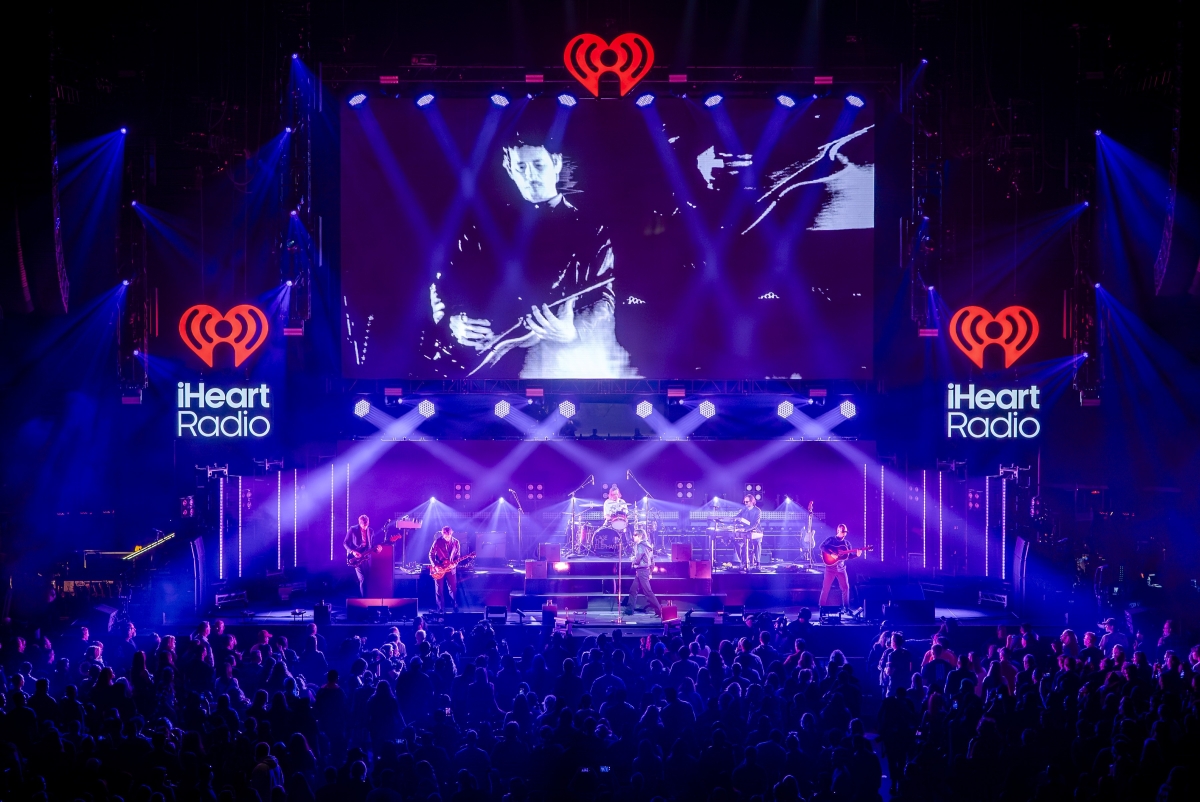
The lighting and video were supplied by 4Wall Entertainment, who have been supporting this iHeart project for a number of years. "4Wall is always fantastic for us," says Patrick Dierson, Production Designer. "They really just provide such a great service. Gear is gear at the end of the day; it's about the people doing it. And they have a matching work ethic to The Activity. We expect a certain level of attention to detail to be paid to things; they match that expectation and go above and beyond it. It's fantastic because it just takes so much worry out of the mix. The phrase, 'We'll figure it out when we get there' is never thrown around ever with them. We despise having to walk in without any sort of a plan, because as I always say, 'hope is not a plan'. You've got to make sure you know what you're doing going in, and 4Wall is just right there with that same thinking; it's great support. 4Wall's leadership is fantastic, as is their team, and their response to everything is really outstanding."
This article was originally posted on PSLN.com and can be found here.
iHeartRadio held its 2026 edition of its ALTer EGO concert in January at LA's Kia Forum, which featured Green Day, Twenty One Pilots, Cage the Elephant, Sublime, Good Charlotte, Myles Smith, Gigi Perez, and Almost Monday. While it's this year's show, it's actually 2025's design. Just as last year's ALTer EGO was about ready to go, the Palisades wildfire broke out and the show was cancelled, so Production Designers, Patrick Dierson and Zack Guthmiller of The Activity, brought back the design for this year's edition since it was a good, solid design. Dierson, who has been designing this iHeart show since 2017, took time to share with PLSN his thoughts on the design and some of the solutions he brought to the table for this annual alternative music concert event.
"It's a very popular show, and it does tend to sell out quickly," says Dierson, "but it has a lot of budgetary constraints. The biggest challenge is to try and make it look much bigger than it costs. That's really the main reason why I've always loved doing this show. It's one of our favorite shows to do every year. Being in January, it's always one of the first shows of the year that we get to do. It's just a lot of fun. It's really challenging because you want to try and keep it fresh and do something new each time. We try to make it look as big as possible, and by all accounts we've gotten some really wonderful praise and feedback this year. The guest artist teams coming in are usually just a lot of fun to work with and were very well put together. It's sort of a reunion show to start off the year for each of us."
Supporting the Guest Artist's Teams
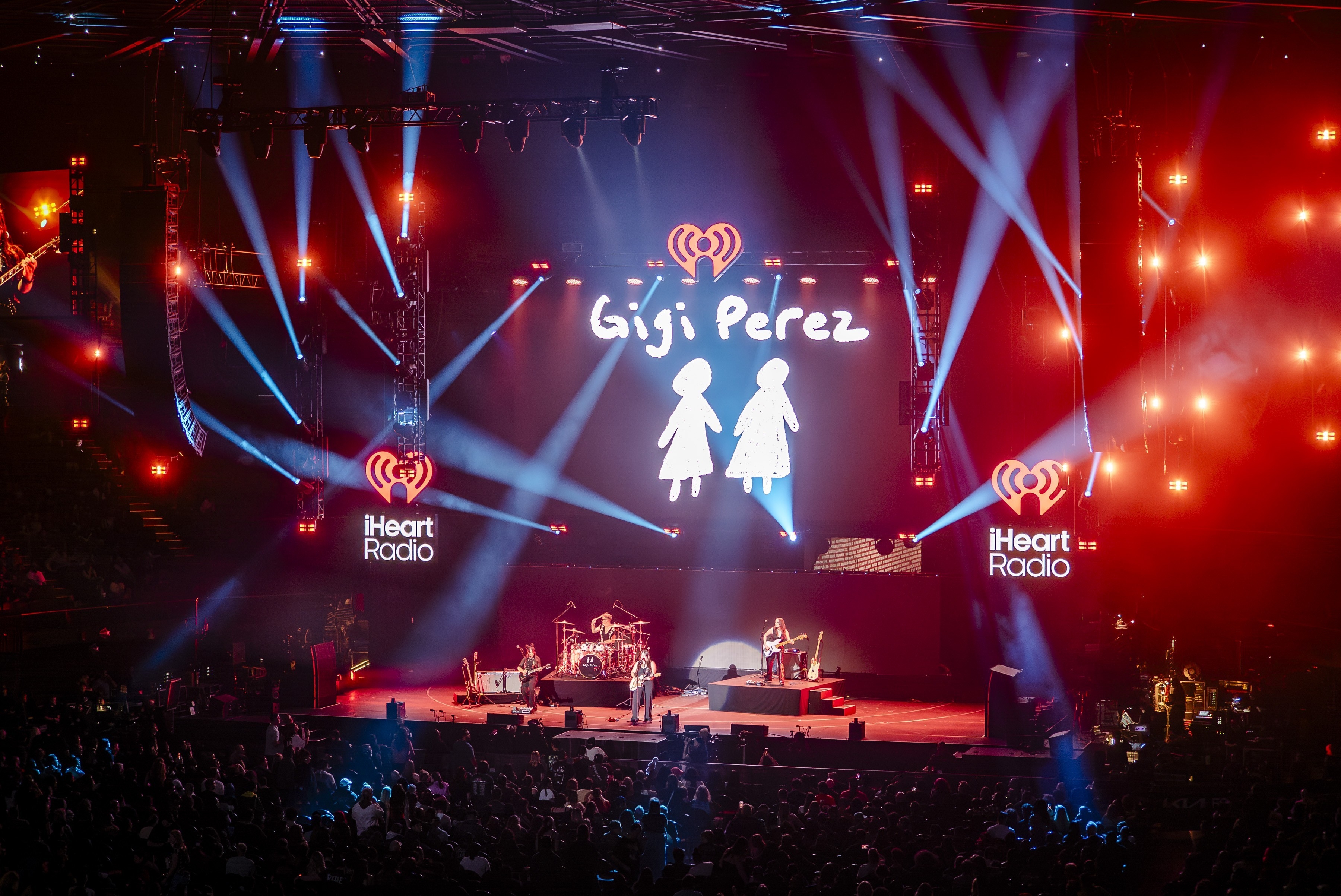
The production team treat this production more like a festival show in terms of how much production the artists can bring in and the changeover time between sets. With this many acts, the team needs to keep it moving. "One of the biggest challenges for the artists is the fact that it's all done on a 48' turntable stage," explains Dierson, "it's very rapid in how the show itself is programmed for talent. We did no more than a four- or five-minute set change. There were a couple of exceptions here and there, but the turntable spins happened very quickly where we had local radio talent coming out to do the introductions, speeches, and things like that. We also ran video clips, but for the most part, our turntable spun and we're off to the races to the next artist. This year we had eight artists performing; usually we have nine or 10, but we were able to extend some of the artist's set times. The one thing we were very stringent about was that before we arrived on site, we did a full artist advance."
Diversified Production Services [DPS] produces the event for iHeartRadio. Dierson has had a long working relationship with DPS, and they included The Activity on the artist advance work for the show. "DPS has a very good methodical flow of how they present information for all of these shows to the artists in advance," says Dierson. "As the production designer, I get tapped to work with the artist's teams well in advance where I help write the artist letter, so we can set the parameters and limitations in writing to the artists, right out of the gate. So, there's really no surprises. Everything's spelled out for them. We get the design done well in advance, and that gave us the ability to check all the physical re- strictions of what's going to happen on that stage. So, for instance, the height of flown video walls that split the center of the turntable, and other elements like that. Those restrictions dictated the height of the floor packages that artists could bring in, and how we move them. Basically, everything that the artist's team wanted to augment their performance had to fit on the turntable, to get set up on the backside of it, and be ready to go for the next set change. So, it must spin into place and then spin straight off. We couldn't have things hanging off the turntable. It became a bit of a technical ballet. We gave them the actual playable area, so the artist knew exactly what they had to work with. We wanted to set everyone up for as much success as possible. The other aspect was that this all had to load-in in one day."
Dierson and the production team brought a variety of ideas to make the show look bigger while staying within their budget. "This year, we went with a lot of vertical hanging trusses," says Dierson, "and we worked with 4Wall and our Lighting Crew Chief, Matthew Weede, specifically to make that process as efficient as possible for the load-in. Vertical trusses can very often be a laborious task and a time-consuming one on site, so we had everything pre-rigged within an inch of its life. We were able to do 20' sticks staggered at different heights, moving off the stage past the PA. We were able to fill the gap between the PA and the off-stage I-Mag screens going out further. So, it just gave a very wide aspect to the overall design."
Key Equipment Choices
As for the rig, "we used a combination of Elation Proteus Lucius, Ayrton Perseo Beams, Chauvet COLORado Pxl Bar 16s, and Color Strike Ms," comments Dierson. "Then we filled out the deck. We actually took some new units out for a spin, since it was so recent to LDI. One item that I saw at the show, and was very interested in, was the ETC/High End Systems' GigaPix units, so we had eight of those as shin kickers on the deck. I wanted to take them out for a spin and try them out. After their performance, I plan on utilizing them a lot more in 2026. As we do with every brand-new unit, we relegate them to the deck so it's easy to deal with in case we find the brand-new thing is not acting right or breaks down. Thankfully, we didn't have a single issue with the units; they performed flawlessly and we were very happy with them."
Like with his festival designs, Dierson strives to limit the fixture types. He did that for ALTer EGO, while still providing "a whole complement of toys for the guest artist's teams to play with to create a lot of effects and fun chases," he says. "If we can do that, it just makes everybody's life easier. For the teams coming in, cloning their shows, and things like that, the more fixture types you add in, it's just more time and noodling about that you have to do to get things just right. We really did try to tighten it up a little bit, but we also tried to do a design that broke hings up into areas. For instance, we leaned more into utilizing the Perseo Beams on the vertical towers and then used the Proteus Lucius more on the horizontal trusses. We used Elation Picassos for our key light out in the house. It's one of those lights that's served us well over the years for key lighting in particular. It's a Swiss Army knife light; it can do a ton of other stuff as well. To make the lighting look right for the I-Mag cameras, we go to great lengths to meter everything out so that those units are matched and color-balanced to the house followspots. We used the Kia Forum's followspots for this event strictly for budgetary reasons. We're able to balance all of that and make sure we have all the value so that it's just easy to pass on to each of the artist's teams as they come in for overnight programming."
The production had a full previsualization suite onsite that was provided by The Activity's sister company, The Farm. They use Depence R4 software for the previz work. "We have that set up the whole time," explains Dierson. "So, for each of the guest artists coming in, we manage a full schedule for their soundchecks, overnight programming, etc. Everybody gets several hours of pre-vis time devoted to them, and then several hours of programming time with the actual rig. Then, day of show, we leave the previz system set-up usually right to about doors so that any guest artist can come back if they need to add something. Very often they'll get a set list change that needs to be accommodated, so we just keep it up as a courtesy for them. At that point we run it as a first come, first serve basis and everybody works around it."
Video Screens
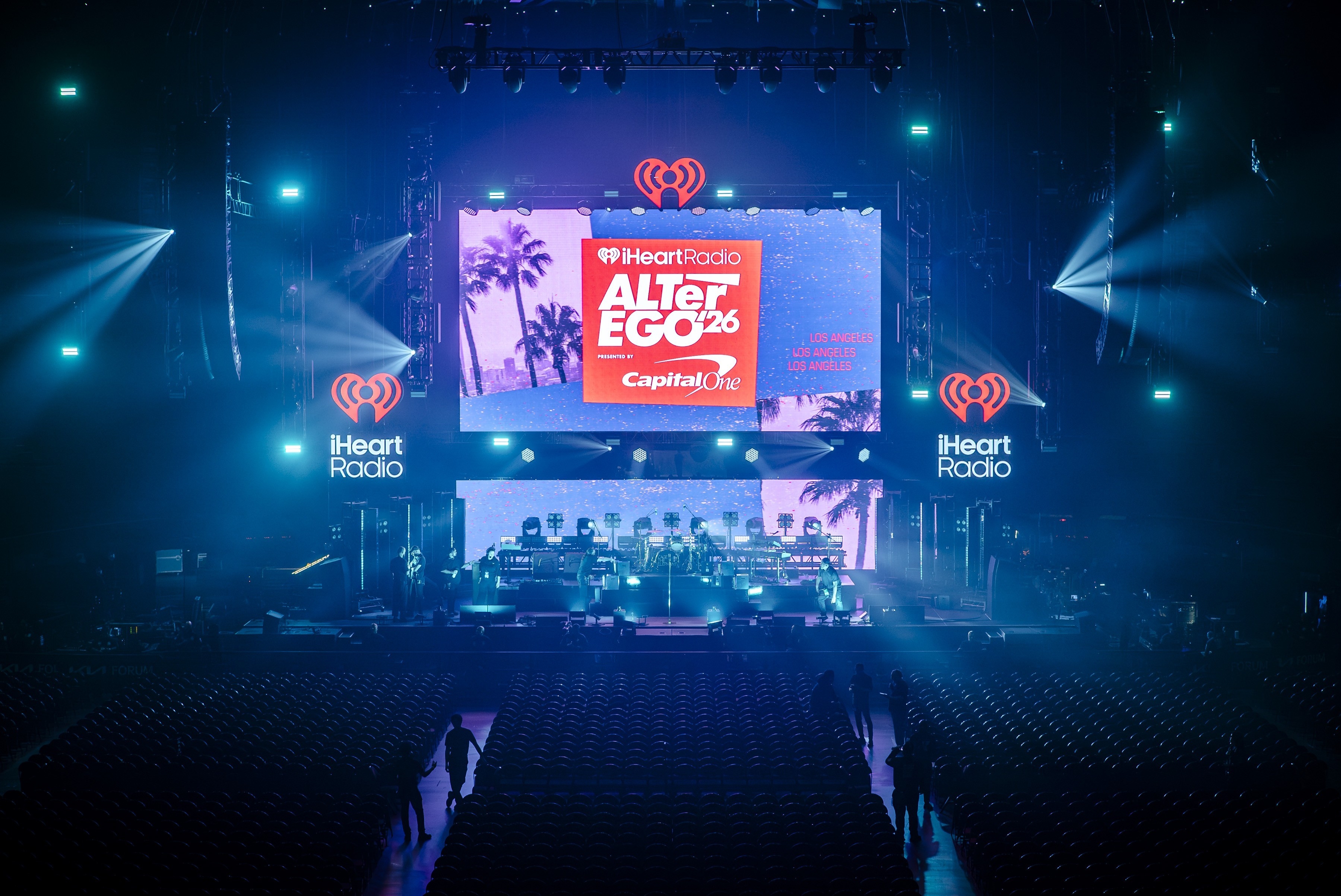
For the video screens, the design team created a large, main hero wall that hung over the turntable and as well as a double-sided, ground-supported LED wall that split the turntable in half. "All of our LED video was done with ROE CB8 tiles," explains Dierson. "The main wall was 38' x 20' and flown, splitting the center of the stage. Then the lower wall, that measured 8' tall x 38' wide, served as a backing scenic element behind the bands. It was a double-sided wall on the turntable, so it could spin with everything. Zack did a full engineering build of a ground-support system that worked out very well. He added out-rigger pipes to go offstage past the turntable that allowed for black drapery to fill the gaps where needed because we do runoff drapes left and right of the wall. We didn't want the audience to see what's happening backstage as there was a constant flurry of activity, including massive deck changes happening back there. We tried to hide that as much as possible. For the two I-Mag screens, we had 24' x 14' rear projection screens."
In terms of video content for ALTer EGO, it was a combination of content from artists who brought their own, and some artist who relied on content from the design team to support their performances. "Manny Conde was the Media Screens Manager for this show," says Dierson. "He was running Disguise servers with a complement of stock content for those artists that didn't have their own. Also, several guest artists had specific Notch effects that they brought for their camera inputs. They did some very creative things with the cameras like specific feedback and glitch effects; things like that." iHeart produces this show in LA's Kia Forum-which pleases Dierson, as "the Kia Forum is one of our favorite places to perform. Many people have a love/hate relationship with it, but I think it's a really fantastic venue. They recently upgraded their floors and seating layout, which actually helped us this year. Also, there's another element that I've always been pleased with in the Kia Forum-and not everybody realizes or uses it-but their ceiling has a full star field of small lights that the house can turn on for you. It's something I utilize almost every time I'm in the venue because it looks fantastic on camera. It's just a slow undulation of twinkling stars above the entire ceiling, and it just gives some visual information to an otherwise black space. Much like the old atmospheric theaters from the 20s and 30s with their twinkling star ceilings. It's one of my favorite features."
In terms of challenges, Dierson notes that the team take most in stride at this point. "It's such a good team of people, and we've all done it together for so many years. It's really just a well-oiled machine working with these groups. We just know the challenges going into it already. Things like front of house being extremely tight on space when you have so many guest artists, things like that end up being very challenging. One thing that helped us a little bit this year is that there was no streaming partner. Traditionally, this show has always had a streaming partner, but not this year, so we got off easy. It was kind of more freeing in a way. We're so tuned into having everything filmed these days, so the team got a chance to not have to think about broadcast-quality and fine-tuning things for a director. It just ended up being a lot more fun because we weren't as precious about the rules and we could just roll with it and do a good, dirty rock show. It was great because I think people were just more relaxed and the guest artists took more chances with some of the things they did and the looks that they created. It was more forgiving; more about why we all got into this business to begin with; it was about the moment of just being there."
Some of the guest artists had fun with their segment. Twenty One Pilots performed a significant portion of their show out in the audience, roaming around doing different gags with them way out in the house. "The crowd ate it up; it was just so much fun," says Dierson. "Their interacting with people was really great. They really do like connecting with the audience, and their team is always fantastic; very creative. They understand the production disruption that comes with an artist wanting to do something like that, and they make it as seamless as it could possibly be. They're just a pleasure to work with. We had gear ready in the house to do those kinds of pickups and reverse things."
Vendor Support
The lighting and video were supplied by 4Wall Entertainment, who have been supporting this iHeart project for a number of years. "4Wall is always fantastic for us," says Dierson. "They really just provide such a great service. Gear is gear at the end of the day; it's about the people doing it. And they have a matching work ethic to The Activity. We expect a certain level of attention to detail to be paid to things; they match that expectation and go above and beyond it. It's fantastic because it just takes so much worry out of the mix. The phrase, 'We'll figure it out when we get there' is never thrown around ever with them. We despise having to walk in without any sort of a plan, because as I always say, 'hope is not a plan'. You've got to make sure you know what you're doing going in, and 4Wall is just right there with that same thinking; it's great support. 4Wall's leadership is fantastic, as is their team, and their response to everything is really outstanding."
The staging, including the turntable, was supplied by All Access Staging and Productions. "All Access is our go-to for all this stuff," says Dierson, "and they're wonderful to deal with. Every vendor has their own individual bag of tricks; being able to have a vendor with a bag of tricks and then have the relationship and trust with them to understand the design and what you're going for is always great. That's something that All Access brings to this show every year; really every time we work with them. In particular this year, we were using their turntable stage and one of our biggest challenges was the amount of cabling that had to go through the turntable and how it turns. What we could facilitate and what we couldn't. We met with All Access and were able to tackle that issue very early. We built a deck system about the center of the turntable that would allow us to build the video wall on top of that and gave us a gap to access to the center. Also, we were able to make the center opening in the turntable a little larger this year to accommodate more cabling as we had a lot of guest artists coming in with their supplemental pack- ages, which adds up very quickly as you go through that process. You want to build that in as early as possible. All actions that become really critical in planning it all out and dealing with the logistics. All Access was just very accommodating through the whole process, so it made it much easier."
Strictly FX was the special effects vendor for ALTer EGO, providing their services directly to the guest artists. "Special effects were artist-dependent," says Dierson. "We didn't have any special effects built in for the overall show. We pick partner vendors, in this case, Strictly FX, to handle the pyro and SFX for the show. Then we basically linked them up directly with the artist. We gave them the parameters of anything that's a no-go; whether that's based on design limitations or building limitations, and then we let them have at it. Twenty One Pilots had a significant pyro show. Cage the Elephant also came in with a fully timecoded pyro show with gerbs, comets, and some concussion mines, as well as a complement of lasers and bounce mirrors or their setup. So, it was a good variety of all sorts of aspects of production. Sublime came in with two inflatable dogs on stage that were just fantastic. They looked amazing."
Standout Solution
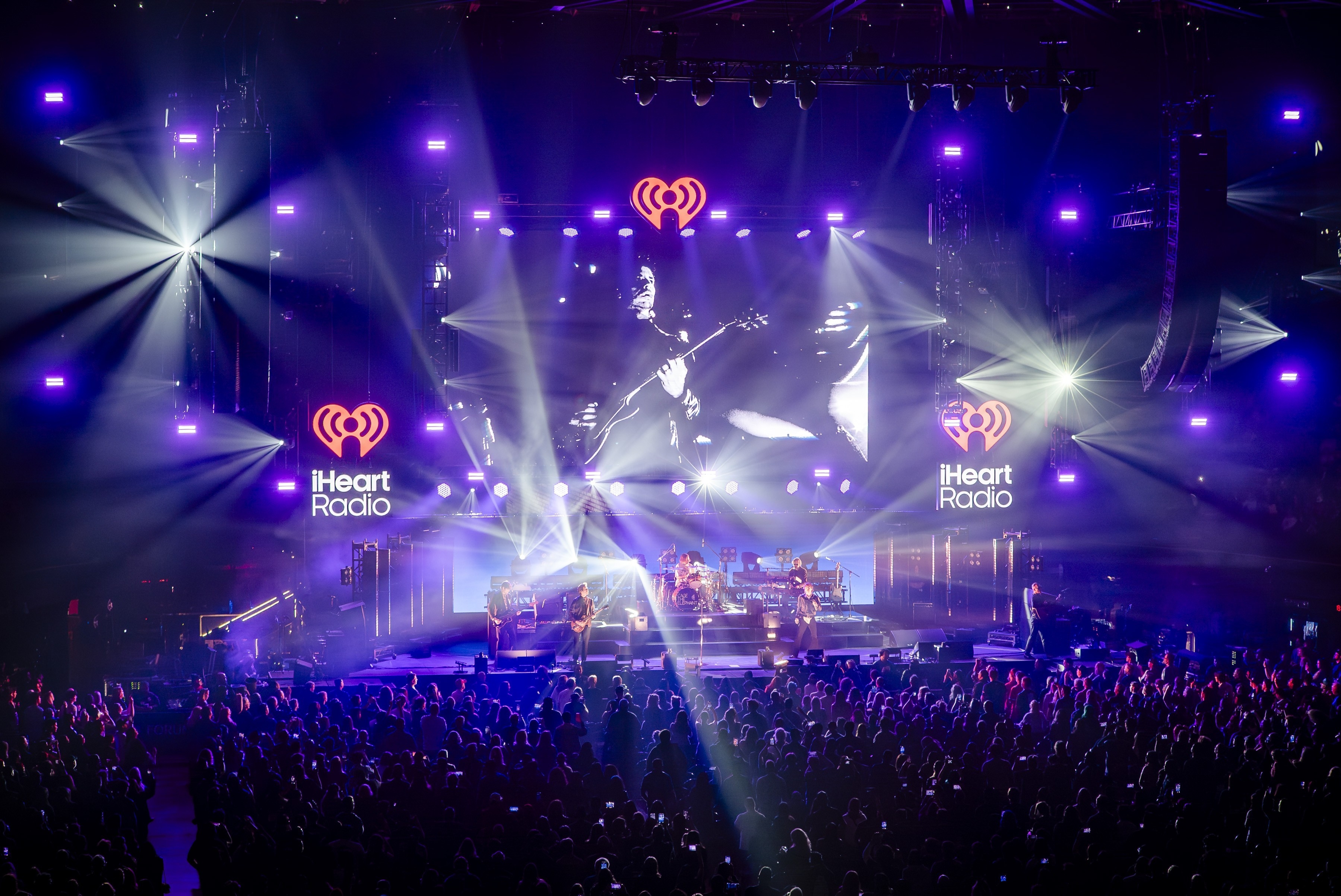
If Dierson were speaking with another designer or production person that had attended the ALTer EGO show, the thing he'd hope that they might have noticed was "the size of it, the visual size. It wasn't a large production, but it looked huge. I think really, it's about placement and depth. One of the things that Zack was pushing me on as we were designing this show was separating our video walls quite a bit and the placement of the lighting. One of the banes of our existence in using a turntable-every designer deals with this on most every show-turntable shows tend to look flat. Usually, you're cutting the center of the turntable. We try to break those rules as much as possible, so we separated things in the design process this year, and that created a significant amount of depth. By the time you start separating things upstage, down-stage, then offstage, and at the different heights, it didn't take a whole lot of gear to really make it look quite massive. Another huge part of that is the quality of the gear. Because of the fixtures that we were able to have this year, those beams travelled and read very far. So, we could space them out a lot more and didn't have negative space when we were pumping all that photonic energy in between those trusses. Light was able to just fill up the whole visual space. All of that helped give a bigger visual scope."
Another element that played into that depth was hanging the main video wall more upstage of the video wall on the turntable at center, as well as adding a lighting truss in the gap between the upper and lower video walls. "We did stagger back the main video wall to add some depth to the design," explains Dierson. "The lower wall on the turntable is double-sided, but it's not back-to-back; the two walls are separated by four feet of depth. So, the flown wall is trimmed directly above the upstage portion of the lower wall. Then we put a lighting truss even farther upstage to all that, since we weren't using a blow through video product. That became a lighting separator; we had some movers and strobes that could shoot from that position, separating the two walls. We wanted a visual line instead of a solid monolith of a wall. We wanted to give some visual disruption there. That lighting truss was pushed upstage, so it was right over where the next artist was set- ting up, so we needed to make sure it didn't impede them. We had to really ensure that whatever they were bringing in like lighting towers, would be able to clear it easily. That's one of those simple and often overlooked challenges when you do something like that. We always mark them on the drawings, so the guest artists catch that right away."
Applying Experience
Dierson and the production team wanted to make all of this as easy as possible for the incoming guest artists and their production teams, noting, "Like a festival run, this is just one stop for the artist team." Dierson has taken his experience working on festivals and shows like this and brings it to bear when designing and managing the incoming artist teams; to make their lives easier. "Having been there on that side of it, it's easy for things to fall through the cracks," comments Dierson. "Personally, I'm very happy in how my career has built to today, I feel a lot of that early experience of what I had had to go through, in my younger career doing festivals; I'm now able to bring that experience to these productions and basically give the heads up to things what we know will be a potential snag for them. It is great having that understanding of both sides of things."
This year's iHeart ALTer EGO came off without a hitch and the stage pictures were impressively massive looking. Yet another successful visual that fully supported all of the artists on the bill thanks in no small part to Dierson, Guthmiller, and The Activity.
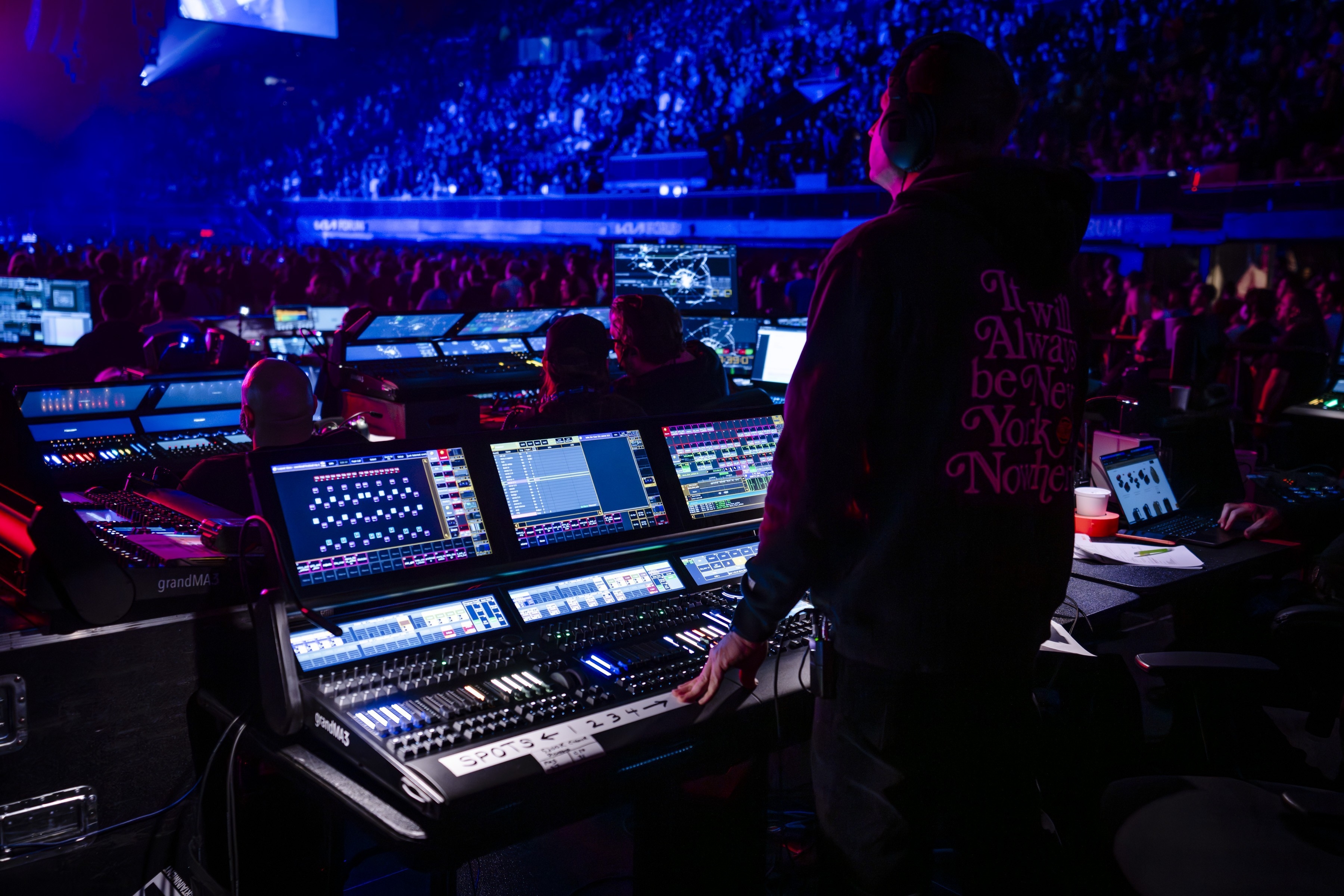
Vendor View
4Wall Entertainment
Bob Suchocki, Sr. VP of Production
On supporting the design and production team:
For this concert 4Wall was pleased to be selected to provide lighting, video, and rigging solutions, along with the crew. Anytime Patrick Dierson reaches out we know we are in for a fun project. He always tries to think outside the box and come up with a fresh look. Zack Guthmiller's attention to detail in his Vectorworks drawings is extremely helpful and we work well with him to make sure what's on paper is attainable in real life.
On why 4Wall was the right vendor:
At 4Wall, we love working with the team at DPS (Diversified Production Services), we've been supporting them on most iHeart projects for the past eight years, and it's always a pleasant experience. This show, the ALTer EGO concert, is always a fun one because it kicks off the year for most artists.